
Your Global Path to Doctoral & Executive Credentials
Partner with internationally accredited universities across Europe, the US & beyond. Personally guided, 100% online, career-focused for working professionals.
 ✦Accredited Alumni
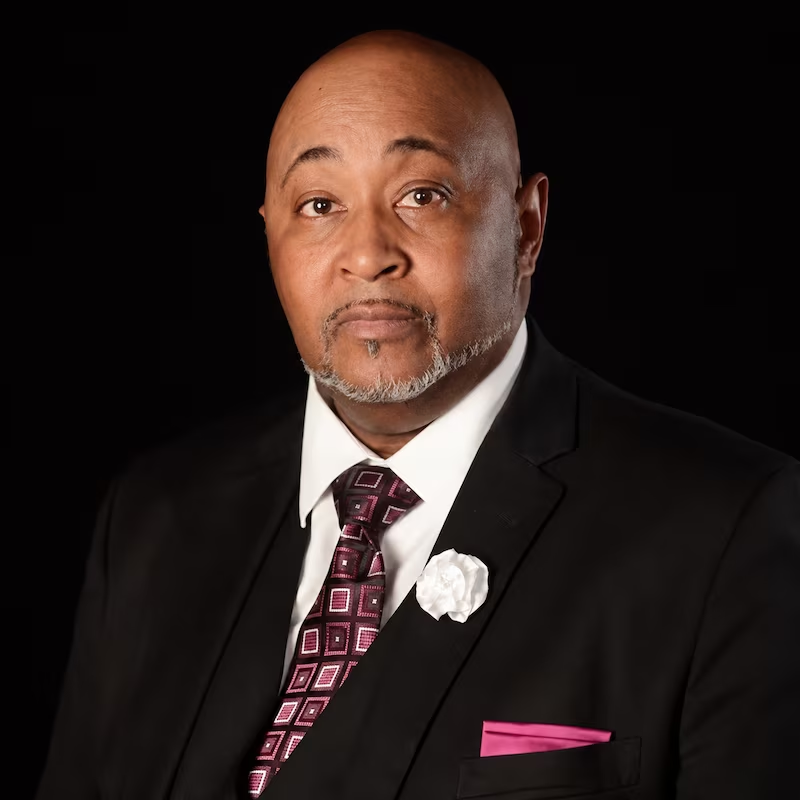
"I had spent decades in public service and security governance. Techversity did not ask me to prove myself again — they reviewed the record itself, and recognised what was already there."
Global Network
Trusted by 10+ accredited
universities worldwide.


Switzerland
Dunster Business School

Switzerland
ESDST


United States
Kennedy University


Malta
EU Global

Switzerland
SBS Swiss

United States
Florida Coastal

Switzerland
SSM

United States
Christian Central University


Estonia
Euro-Asian University

United States
Prowess University
Dunster Business School
ESDST
Kennedy University
EU Global
SBS Swiss
Florida Coastal
SSM
Christian Central University
Euro-Asian University
Prowess University
Why Trust Techversity
Proof, not
promises.
"In an industry of unverifiable claims, we hold ourselves to a different standard."
Every claim links to an official registry. Always.
We don't say 'internationally accredited' and leave it there. Every program page links directly to the issuing body's official register — so you can verify before you trust.
We tell you exactly what an Honorary Doctorate is — and is not.
Most platforms bury the fine print. We put the disclaimer at the top. An honorary title is recognition for achievement, not an earned academic degree. We say that clearly, every time.
Anyone can verify a credential issued through us personally confirmed.
Employers, background-check teams, family members — anyone can request confirmation of a Techversity-issued certificate or degree. A named advisor checks it against the issuing institution's own register — no automated guesswork.
Programs
Explore Our Most
In-Demand Programs
Every program comes with personal advisory support — from first inquiry to enrollment.

Premium Pathway
"The record a life's work earns."
Doctorate Programs
Earn the Title Your
Career Has Already Built.
Doctor of Business Administration
An applied doctoral path for senior leaders who research real problems inside their own organizations — rigorous, practical, immediately useful.
Duration
18 Months
Ideal For
Senior executives, 10+ yrs
Degree Pathways
Programs for Every
Career Stage
Whether you're beginning, advancing, or seeking the highest credential — there's a path built for you.


Certifications
Career-Ready Skills
in Weeks, Not Years
Industry-aligned programs with career support — not just a certificate.

Data Science
Data Science
Build and deploy production-grade ML models. Python, TensorFlow, scikit-learn — from raw data to live inference.
What you'll learn
What's included
All certifications include career support— resume review, interview prep & placement assistance.
Browse All →The Process
Four steps to
the title "Dr."
One dedicated advisor walks beside you the entire way.
Check Your Eligibility
Answer a few quick questions about your background, experience, and goals. Our system instantly matches you with the doctoral and executive pathways that fit your profile.
Speak With an Advisor
Get paired with a dedicated education advisor who understands your field. Together you'll select the ideal program and the right accredited university partner — personally, never via a chatbot.
Submit Your Application
A guided, completely paperless application. Your advisor prepares every document with you and reviews it against the university's exact requirements before it's ever submitted.
Get Enrolled
Receive your official admission confirmation from the accredited university, complete a guided onboarding, and begin your journey toward a globally recognised credential.
Why Techversity
Built on trust, proven at scale.
 01
01 02
02 03
03 04
04Global Reach
Learners connected across countries and continents, guided by one consistent standard.
01Global Reach
Learners connected across countries and continents, guided by one consistent standard.
02Accredited Partners
Every credential we facilitate is backed by an independently verified university.
03Fast-Track Timeline
A structured, guided pathway — from first conversation to conferment.
04Alumni Network
Join a growing community of recognised professionals worldwide.
Success Stories
Words from those who
walked the path.







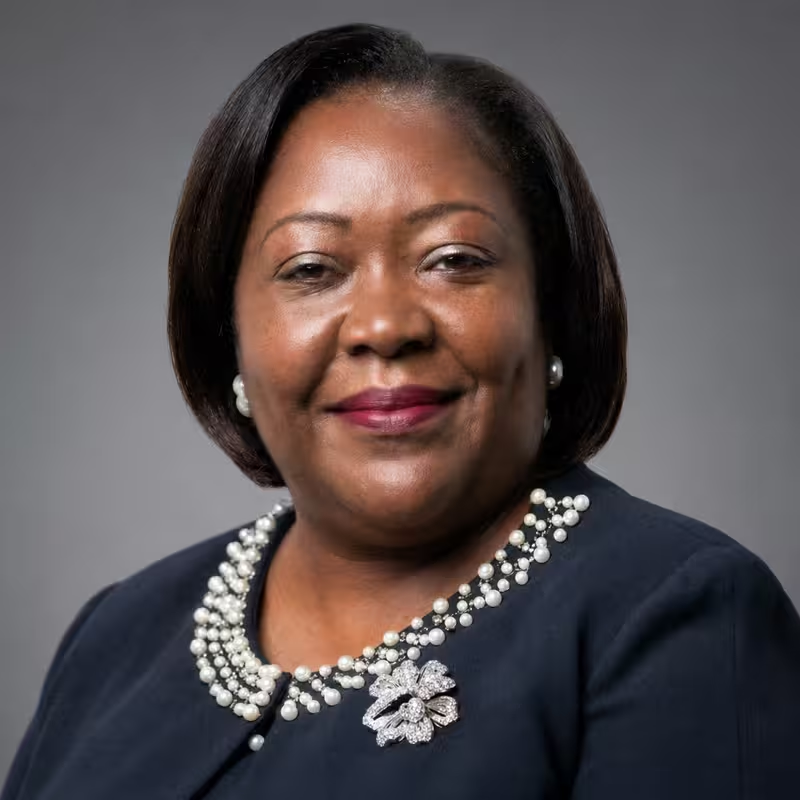

I had spent decades in public service and security governance. Techversity did not ask me to prove myself again — they reviewed the record itself, and recognised what was already there.
Honorary PhD · Public Leadership & Security GovernanceFrom the Blog
Guides & Insights
Worth Reading

Free Consultation
Start your journey.
By submitting, you agree to be contacted by a Techversity advisor. We respect your privacy.